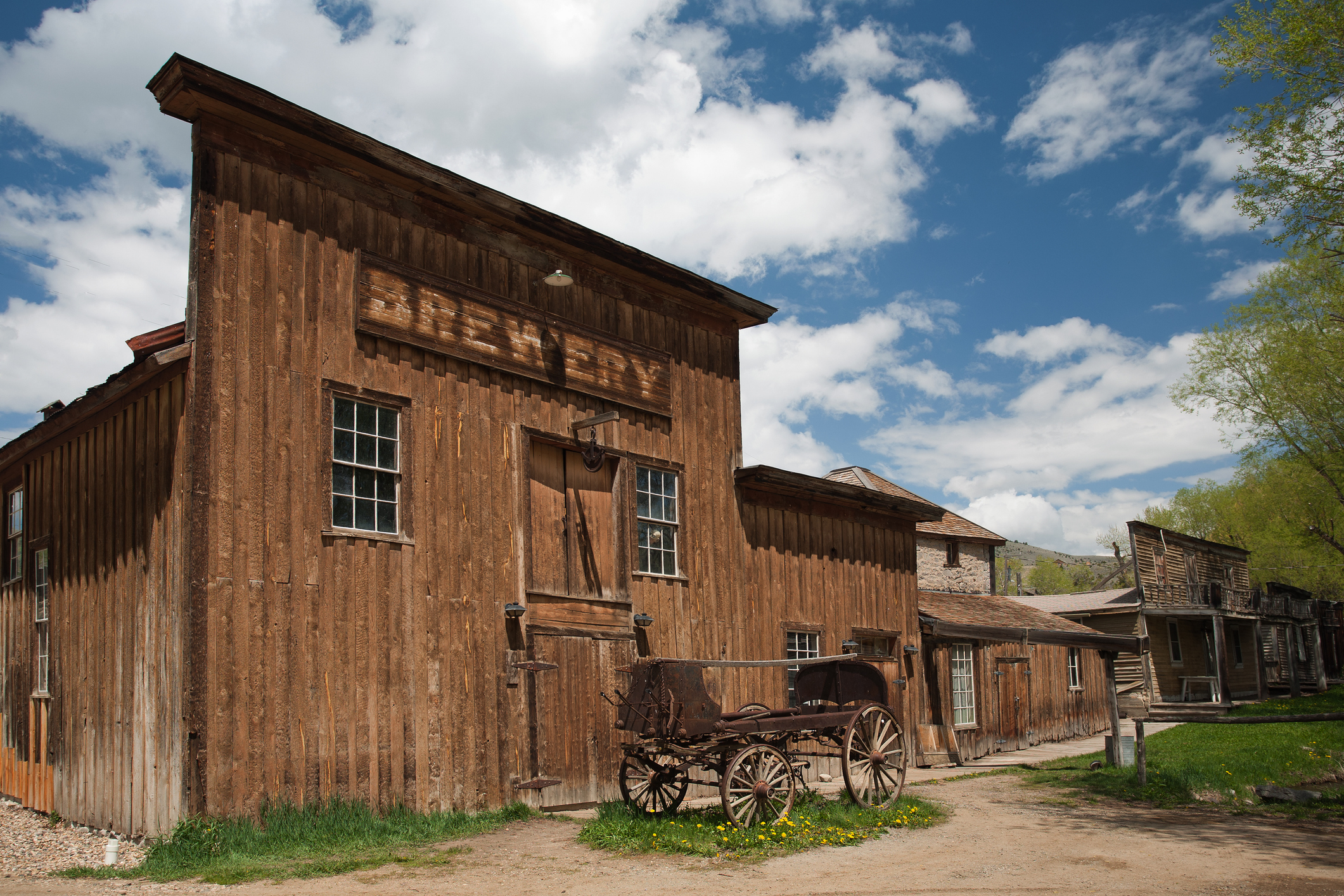
Ghost towns occupy a silent Room amongst historical past and abandonment. The moment shaped by ambition, business, or migration, they now stand largely vacant, their constructions bit by bit reclaimed by time. Traveling to these spots is just not just an workout in nostalgia; it's an encounter While using the impermanence of human exertion. Ghost towns provide classes about economic cycles, community resilience, as well as fragile romance among people and put. Let's check them out with me, Gus Woltmann.
How Ghost Cities Are Developed
Ghost cities are not often the result of one function. Instead, they arise by way of a convergence of financial, environmental, and social forces that slowly—or occasionally abruptly—undermine The explanations individuals settled there to start with. Knowing how ghost cities are developed reveals much with regards to the fragility of human communities and their dependence on exterior systems.
The most typical catalyst is financial collapse. Several ghost cities had been designed about one business for instance mining, logging, manufacturing, or rail transport. These industries normally promised speedy prosperity but relied on finite methods or unstable markets. Each time a mine was depleted, a manufacturing unit closed, or possibly a rail line was rerouted, Careers vanished Virtually right away. Without substitute work, people have been compelled to leave looking for prospect in other places.
Environmental elements also Engage in an important function. Drought, flooding, soil depletion, or organic disasters may make a region unlivable or economically unviable. Agricultural towns, particularly, have disappeared when land could no more maintain crops or livestock. Occasionally, human exercise itself—overmining, deforestation, or pollution—accelerated environmental decline, turning after-feasible settlements into dangers.
Technological improve is another potent driver. Innovations can render total cities out of date by doing away with the necessity for localized labor. Automation, new transportation routes, and shifts in energy manufacturing have continuously reshaped settlement designs. Towns that fall short to adapt to these alterations generally working experience slow decline as populations dwindle more than decades as opposed to a long time.
Political and social forces could also lead. Border alterations, coverage shifts, or federal government choices to relocate populations have emptied towns with tiny warning. In some regions, war or forced displacement has remaining settlements deserted, their infrastructure intact but unused.
What unites these will cause is dependency. Ghost cities generally kind in which communities depend as well seriously on a single useful resource, field, or exterior authority. When that foundation collapses, the social fabric unravels rapidly. Colleges shut, products and services vanish, and remaining citizens confront growing isolation.
Ultimately, ghost cities are designed when adaptation fails to help keep speed with modify. They stand as physical reminders that flourishing communities call for diversity, resilience, and foresight—qualities that identify no matter if a town evolves or is left at the rear of.
Architecture being a Historical History
The architecture of ghost cities functions being an unintentional but remarkably in depth historical report. Extended following penned paperwork fade or are lost, properties continue to be to inform the Tale of how individuals lived, labored, and understood their environment. In abandoned settlements, architecture preserves history in its most Bodily type—unfiltered, incomplete, and deeply revealing.
Each individual framework reflects the priorities on the community that designed it. Residential residences reveal social hierarchies by dimension, structure, and components. Larger sized homes normally belonged to professionals or entrepreneurs, although lesser, easier dwellings housed laborers as well as their families. The presence of porches, shared courtyards, or clustered housing features insight into social conversation and Group norms. Even the orientation of buildings speaks to weather awareness and everyday routines.
Professional and civic buildings give further context. Universities, churches, saloons, and basic outlets indicate what a Neighborhood valued outside of survival. A prominently put church suggests the centrality of faith, when multiple saloons could place to transient populations or labor-heavy industries. Courthouses, submit workplaces, and railway depots replicate a city’s integration into broader political and economic methods.
Resources Employed in design also tell a story. Short term boomtowns generally relied on Wooden and quickly assembled structures, signaling expectations of quick-expression expansion. Extra durable components for example brick or stone advise assurance in lengthy-phrase prosperity. When these sound structures now stand empty, they spotlight the disconnect amongst expectation and final result.
Decay by itself will become Component of the historic report. Weathering, collapse, and modification expose just how long a city has become deserted And just how character reclaims human Room. Broken windows, rusted metal, and overgrown foundations illustrate the slow negotiation between crafted environments and natural forces.
Unlike preserved historic sites, ghost cities deficiency curatorial intervention. There won't be any plaques to elucidate importance or restored facades to guidebook interpretation. Site visitors should study history through observation and inference, partaking additional actively Along with the previous. This absence of narrative Handle tends to make the experience extra particular and, generally, a lot more impactful.
In this way, architecture in ghost cities does a lot more than document history—it embodies it. These buildings stand as silent witnesses to ambition, adaptation, and decrease, providing classes that are not taught, but encountered.
Lessons About Impermanence
Ghost cities supply some of the clearest classes about impermanence the physical earth can provide. Unlike summary reminders of alter, these deserted spots make transience visible and unavoidable. Streets the moment fast paced with commerce, properties as soon as crammed with program, and institutions designed to previous now stand silent. Their stillness forces guests to confront how non permanent even by far the most assured human endeavors is usually.
The most striking lessons is how immediately prosperity can vanish. A lot of ghost cities have been founded with optimism and certainty, supported by booming industries or strategic relevance. Investments were being created, infrastructure expanded, and futures imagined. Nonetheless when conditions shifted—irrespective of whether by means of financial collapse, technological alter, or environmental pressure—those self same foundations became liabilities. The pace of drop frequently contrasts sharply with The boldness that preceded it.
Ghost cities also reveal the illusion of permanence while in the built surroundings. Properties are often created to challenge stability and continuity. Brick facades, civic monuments, and durable elements suggest endurance. When these structures are still left guiding, their existence underscores a sobering truth: permanence is undoubtedly an aspiration, not a assurance. Human timelines and natural timelines seldom align.
One more lesson lies in adaptability. Cities that didn't diversify or adjust to change have been by far the most susceptible. Reliance on only one business or source still left very little home for Restoration when conditions shifted. Ghost towns Therefore serve as cautionary examples, highlighting the significance of overall flexibility and resilience in both equally financial setting up and Group development.
On a far more personal level, ghost towns obstacle assumptions about development. Modern societies often equate advancement with growth, expansion, and permanence. These abandoned places suggest a far more cyclical reality—one in which growth is accompanied by contraction, and achievements is non permanent rather then cumulative. This standpoint encourages humility, reminding us that drop is just not constantly the result of failure, but of changing contexts.
Lastly, ghost cities emphasize the persistence of memory around product results. Even though firms close and populations disperse, traces of human presence keep on being. Names carved into partitions, private belongings remaining guiding, and altered landscapes carry emotional weight extensive just after financial worth disappears. What endures isn't prosperity, though the imprint of lived practical experience.
In instructing impermanence, ghost towns never offer you despair. As an alternative, they invite reflection—on how communities may Establish with consciousness of alter, And exactly how that means can exist even when permanence would not.
Human Presence in Absence
Ghost cities are outlined by absence, yet These are saturated with human presence. Even without the need of inhabitants, these spots really feel inhabited by memory, intention, and trace. The absence of folks sharpens awareness of what continues to be powering, reworking emptiness into a powerful reminder of life as soon as lived and routines at the time repeated.
Own objects are frequently the most placing indicators of the presence. A chair still left near a window, pale wallpaper, handwritten signage, or discarded tools propose interruption rather then conclusion. These remnants indicate decisions manufactured stressed, departures shaped by necessity rather then selection. Compared with curated artifacts, they really feel personal and unresolved, drawing readers into imagined narratives in the folks who utilized them.
The format of Areas additional reinforces this human imprint. Kitchens, bedrooms, and communal regions continue to reflect designs of everyday life. The positioning of doorways, worn floorboards, and improvised repairs expose routines and priorities. These information enable it to be difficult to check out ghost cities as basically deserted structures; they remain deeply private environments frozen in time.
Silence performs a very important role in shaping perception. Without the Seems of action, people come to be more attuned to subtle specifics—the creak of wood, the movement of wind, the Enjoy of sunshine by damaged Home windows. This heightened recognition encourages contemplation and empathy. The silent allows Area for reflection as opposed to distraction, generating the knowledge psychological in lieu of observational.
Human existence is likewise felt as a result of modification of your landscape. Paths worn into the bottom, altered waterways, and reshaped terrain testify to labor and adaptation. Even in decay, these variations endure, marking the land with proof of human ambition and energy. Character’s gradual reclamation isn't going to erase this heritage; it coexists with it.
Emotionally, ghost cities typically evoke a sense of shared vulnerability. Site visitors acknowledge familiar human wishes—security, opportunity, belonging—embedded in deserted sites. This recognition bridges time, collapsing the space amongst current observer and past inhabitant. The encounter turns into much less about loss and more details on continuity of human practical experience.
In the long run, human presence in ghost towns is not really erased by absence. It can be amplified. From the stillness, traces of common existence speak extra loudly than crowds at any time could. These areas remind us that human stories never vanish when individuals go away—they linger, embedded in Place, waiting around to be found.
What Ghost Cities Teach Us
Ghost cities educate classes that stretch much further than their deserted buildings. They functionality as open-air lecture rooms, giving insight into financial conduct, social resilience, and the very long-phrase penalties of human determination-creating. By observing what continues to be, site visitors gain point of view on how societies form, prosper, and ultimately unravel.
Among the list of clearest lessons is the potential risk of overdependence. Numerous ghost cities had been designed about only one resource or marketplace, leaving small place for adaptation when situations adjusted. These locations display how vulnerability increases when variety is absent. Sustainable communities involve versatility, innovation, and contingency scheduling—characteristics generally overlooked for the duration of durations of fast expansion.
Ghost cities also spotlight the boundaries of scheduling and prediction. Towns have been normally developed with self esteem, assuming steady demand and prolonged-time period viability. Their abandonment reveals how unpredictable exterior forces—marketplace shifts, technological improvements, environmental improve—can rapidly invalidate even effectively-intentioned tactics. This recognition encourages humility in modern advancement and policymaking.
One more lesson lies in the connection concerning people and spot. Ghost towns demonstrate how deeply human id is often tied to geography and work. When livelihoods disappear, communities fracture, even when buildings stay. This underscores the significance of social infrastructure—schooling, Health care, cultural institutions—that can help communities endure over and above financial operate.
Memory and legacy also are central themes. Ghost cities remind us that what survives will not be results, but trace. When prosperity fades, proof of exertion, hope, and adaptation persists. These remnants really encourage reflection on how present-day societies are going to be remembered—not by their ambitions, but by whatever they go away guiding when problems adjust.
Ghost towns more educate respect for scale and sustainability. Immediate enlargement generally ignores environmental boundaries, resulting in extended-phrase implications that outlast human existence. The land all over deserted towns frequently bears scars of extraction or misuse, reinforcing the necessity for dependable stewardship.
Last but not least, ghost towns teach empathy. They humanize record by grounding it in here lived practical experience as an alternative to abstract data. Readers are reminded that decrease is rarely caused by failure by itself, but by shifting programs past individual Command.
Inside their silence, ghost towns produce strong instruction: progress is fragile, permanence is illusory, and considerate adaptation is important. What we Develop issues—but how we Construct, and why, matters considerably more.